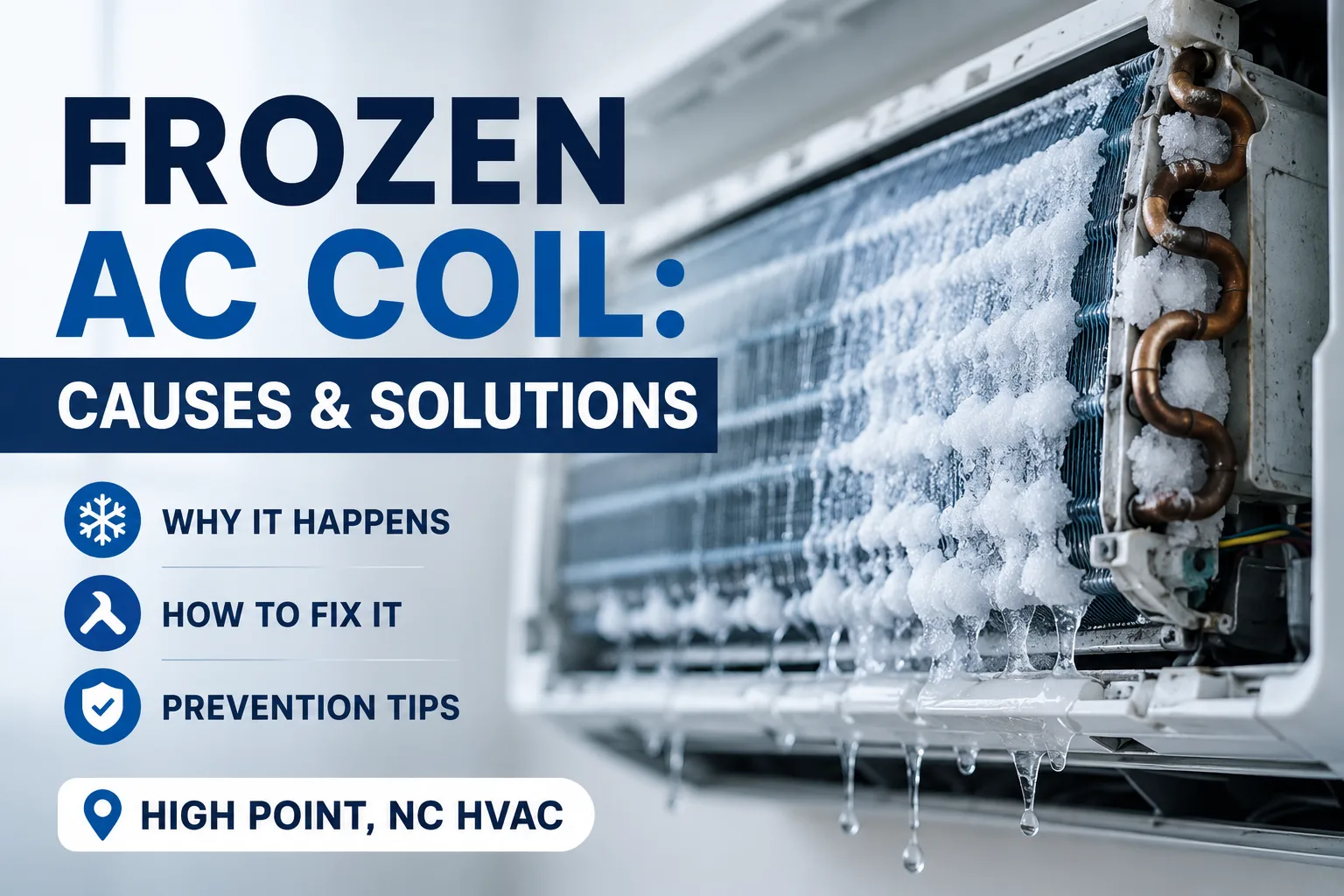

A frozen AC coil is one of the most common air conditioning problems homeowners experience during hot North Carolina summers. Many people are surprised to see ice forming on their HVAC system when outdoor temperatures are extremely high, but frozen evaporator coils are actually a sign that something inside the system is not working properly.
If left untreated, a frozen coil can reduce cooling performance, increase energy bills, and eventually lead to major HVAC damage. Understanding what causes evaporator coils to freeze can help homeowners prevent costly repairs and keep their cooling systems operating efficiently throughout the summer.
What Is an Evaporator Coil?
Your evaporator coil is an important part of the air conditioning system located inside the indoor air handler. Its job is to absorb heat from the air inside your home.
As warm indoor air passes over the evaporator coil, refrigerant inside the coil removes heat and cools the air before it circulates back through the home.
When airflow becomes restricted or refrigerant levels are incorrect, the temperature of the coil can drop too low and moisture on the coil begins freezing into ice.
Signs Your AC Coil May Be Frozen
Frozen evaporator coils do not always create obvious symptoms immediately. In many cases, homeowners first notice cooling problems before realizing ice has formed inside the HVAC system.
Common signs of a frozen AC coil include:
- Warm air coming from vents
- Weak airflow throughout the home
- Ice buildup around refrigerant lines or indoor components
- Water leaking near the air handler
- Long cooling cycles
- Higher electricity bills
- AC system constantly running
Some homeowners throughout High Point notice frozen coils during periods of extreme humidity when the air conditioner runs continuously throughout the day.
Dirty Air Filter Restricting Airflow
A clogged air filter is one of the most common reasons evaporator coils freeze.
Your HVAC system relies on proper airflow to move warm air across the evaporator coil. When the filter becomes packed with dust, dirt, and debris, airflow becomes restricted.
Without enough warm air moving across the coil, temperatures inside the system can drop below freezing and ice begins forming on the coil surface.
Dirty air filters can also lead to:
- Weak airflow
- Uneven cooling
- Longer cooling cycles
- Higher energy bills
Most homeowners should replace HVAC air filters every 1 to 3 months depending on household conditions and system usage.
Routine HVAC maintenance services in High Point NC can help prevent airflow restrictions before they create larger cooling problems.
Low Refrigerant Levels
Low refrigerant is another major cause of frozen evaporator coils.
When refrigerant levels become too low due to a leak, pressure inside the system drops and the evaporator coil becomes excessively cold. This allows condensation on the coil to freeze into ice.
Common signs of low refrigerant include:
- Hissing sounds
- Warm air from vents
- Frozen refrigerant lines
- Long cooling cycles
- Reduced cooling performance
If refrigerant levels are low, simply adding more refrigerant is not enough. The system must be inspected for leaks and repaired properly.
Professional AC repair services in High Point NC can identify refrigerant issues and restore proper cooling performance safely.
Blocked or Closed Air Vents
Many homeowners unknowingly restrict airflow by closing too many supply vents throughout the home.
When airflow becomes limited, less warm air reaches the evaporator coil, increasing the risk of freezing.
Furniture blocking vents, dirty ductwork, or collapsed ducts can also contribute to airflow restrictions.
Keeping vents open and unobstructed helps maintain balanced airflow throughout the HVAC system.
Dirty Evaporator Coil
Over time, evaporator coils can collect dirt, dust, and debris. Dirty coils reduce heat absorption and restrict airflow around the coil surface.
When heat transfer becomes inefficient, ice may begin forming on the coil.
Dirty evaporator coils are especially common in systems that have not received regular HVAC maintenance over several years.
Professional cleaning during seasonal AC tune-up services can help improve efficiency and prevent frozen coil problems.
Blower Fan Problems
Your blower fan is responsible for circulating air throughout the HVAC system. If the blower motor is failing or operating improperly, airflow may become too weak to keep the evaporator coil warm enough.
Blower fan issues often create:
- Weak airflow from vents
- Uneven cooling
- Warm indoor temperatures
- Frozen coils
Professional HVAC inspection can determine whether the blower motor or fan components need repair or replacement.
What To Do If Your AC Coil Freezes
If you notice ice buildup on your HVAC system, turn the air conditioner off immediately.
Continuing to run the system while the coil is frozen can damage the compressor and other expensive HVAC components.
Homeowners can take a few simple steps before calling a technician:
- Turn off the cooling system
- Replace the air filter
- Check vents for blockages
- Allow the coil to thaw completely
- Inspect the thermostat settings
However, if the system continues freezing after restarting, professional diagnosis is necessary to identify the root cause.
North Carolina Humidity Can Increase Frozen Coil Problems
High Point homeowners often experience frozen evaporator coils during humid summer weather when HVAC systems operate continuously throughout the day.
Older systems, dirty filters, restricted airflow, and refrigerant issues become much more noticeable during periods of extreme heat and humidity.
Regular maintenance before summer begins can significantly reduce the risk of frozen AC coils during peak cooling season.
How Frozen AC Coils Affect Cooling Performance
As ice continues building on the evaporator coil, airflow and heat absorption become more restricted.
This often leads to:
- Reduced cooling performance
- Warm air from vents
- Longer cooling cycles
- Increased energy usage
- System strain
Many homeowners first discover frozen coil issues after noticing their AC running but not cooling properly or experiencing warm air coming from vents.
Professional Frozen Coil Repair in High Point NC
If your evaporator coil continues freezing repeatedly, professional HVAC service is the safest way to prevent larger system damage.
Experienced technicians can inspect airflow, refrigerant levels, blower performance, and overall system condition to identify the exact cause of the problem.
Homeowners throughout High Point NC rely on professional HVAC services to keep their cooling systems operating efficiently during the hottest months of the year.
Frequently Asked Questions
What causes an AC coil to freeze?
Frozen evaporator coils are commonly caused by restricted airflow, dirty air filters, low refrigerant, dirty coils, or blower fan problems.
Can I run my AC with a frozen coil?
No. Running the system while the coil is frozen can cause serious compressor damage and additional HVAC repairs.
How long does it take for a frozen AC coil to thaw?
Depending on the amount of ice buildup, thawing can take several hours after the system is turned off.
Can a dirty air filter freeze my AC?
Yes. Restricted airflow from a clogged air filter is one of the most common causes of frozen evaporator coils.
Should I call an HVAC technician for a frozen coil?
If the coil continues freezing after changing the filter and allowing the system to thaw, professional inspection is recommended.