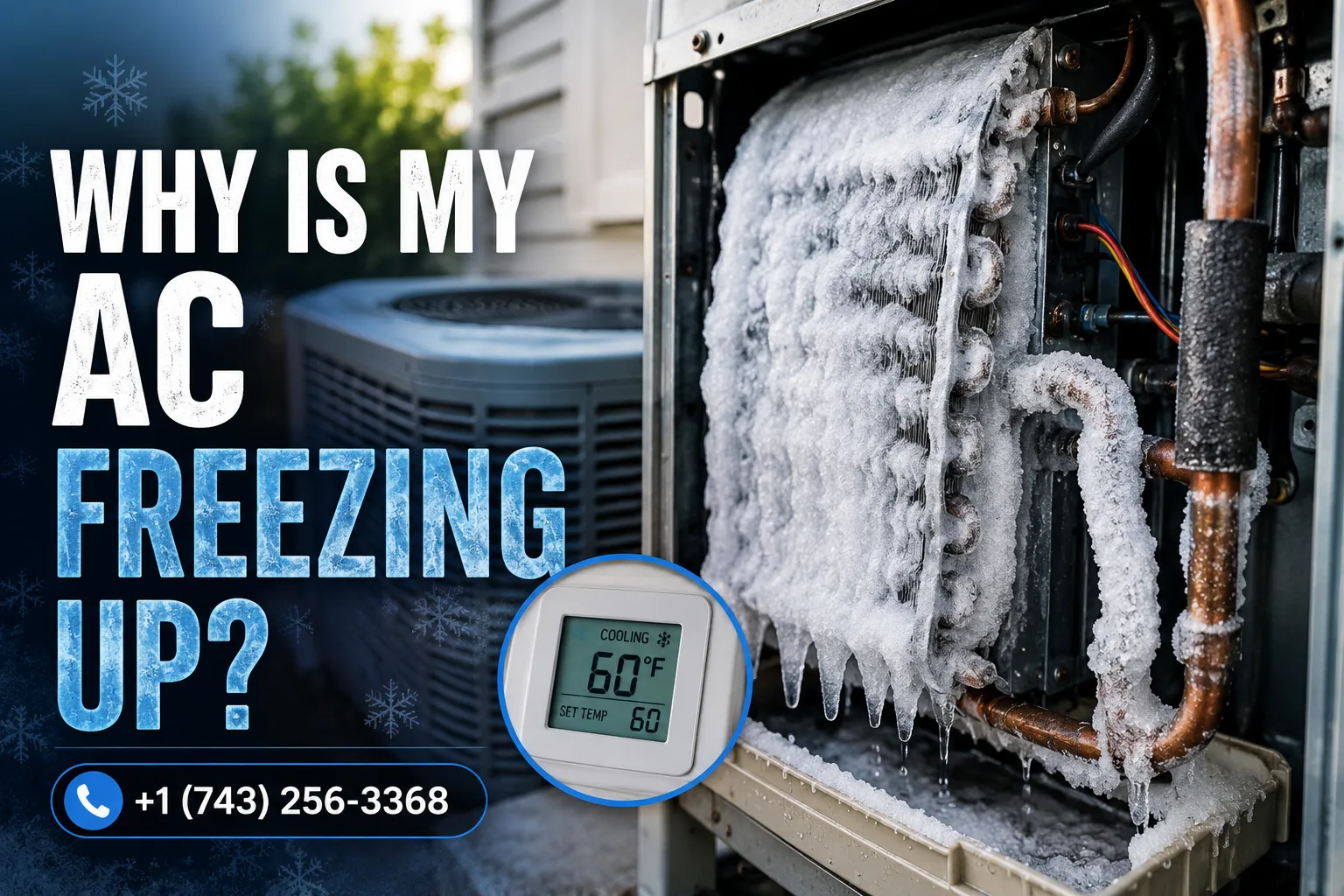

An air conditioner is supposed to cool your home, not turn into a block of ice. If you notice ice forming on your indoor evaporator coil, refrigerant lines, or outdoor unit, it usually means something is preventing your system from operating properly.
A frozen AC unit is one of the most common air conditioning problems homeowners deal with during hot weather. While the system may still seem to cool temporarily, continuing to run it while frozen can lead to compressor damage, higher energy bills, poor airflow, and expensive repairs.
Understanding why your AC is freezing up can help you catch problems early before they turn into major HVAC failures.
If your cooling system is experiencing freezing problems, professional AC repair in High Point NC can help identify the underlying issue and restore proper performance.
Signs Your AC Is Freezing Up
Sometimes the ice is visible immediately, while other times the symptoms appear first.
Common signs include:
- Ice buildup on refrigerant lines
- Frozen evaporator coil
- Weak airflow from vents
- AC running constantly
- Warm air coming from vents
- Water leaking around the indoor unit
- Hissing or bubbling noises
- Higher electric bills
- Outdoor unit covered in frost or ice
If you notice any of these problems, it is important to shut the system off before further damage occurs.
What Causes an AC Unit to Freeze?
Air conditioners freeze when airflow or refrigerant balance becomes disrupted. The evaporator coil gets too cold, moisture in the air condenses, and eventually freezes into ice.
Several issues can cause this problem.
Dirty Air Filter Restricting Airflow
One of the most common reasons an AC freezes up is a clogged air filter.
Your HVAC system needs steady airflow to keep the evaporator coil operating at the correct temperature. When the filter becomes packed with dust and debris, airflow decreases and the coil becomes too cold.
This causes condensation to freeze on the coil surface.
Signs of a Dirty Filter
- Weak airflow
- Dust buildup around vents
- AC running longer than normal
- Ice on indoor refrigerant lines
Replacing the air filter regularly is one of the easiest ways to prevent frozen AC problems.
Related reading: How Often Should You Change Air Filters?
Low Refrigerant Levels
Low refrigerant is another major reason AC systems freeze.
When refrigerant levels drop because of a leak, pressure inside the evaporator coil decreases. This causes the coil temperature to fall below freezing.
Instead of properly absorbing heat, the coil begins forming ice.
Common Signs of Refrigerant Problems
- Ice on copper refrigerant lines
- Hissing sounds
- AC struggling to cool
- Long cooling cycles
- Rising indoor humidity
Low refrigerant should always be handled by a licensed HVAC technician because leaks must be repaired before recharging the system.
Blocked or Closed Air Vents
Closing too many vents can disrupt airflow throughout the HVAC system.
Many homeowners believe shutting vents in unused rooms saves energy, but this can actually create pressure imbalances that reduce airflow across the evaporator coil.
When airflow drops too low, freezing becomes possible.
Make sure:
- Supply vents remain open
- Return vents are unobstructed
- Furniture is not blocking airflow
- Curtains are not covering vents
Dirty Evaporator Coil
Over time, evaporator coils collect dirt, pet hair, and dust.
A dirty coil cannot absorb heat efficiently, causing temperatures to drop excessively and moisture to freeze.
Dirty coils also reduce cooling performance and force the AC to work harder.
Professional coil cleaning can improve:
- Cooling efficiency
- Indoor comfort
- Airflow
- Energy usage
- System lifespan
Blower Fan Problems
The blower fan pushes air across the evaporator coil.
If the blower motor fails or runs improperly, airflow becomes restricted and the coil may freeze quickly.
Blower Issues May Include
- Weak airflow from vents
- Strange noises
- AC shutting off unexpectedly
- Uneven room temperatures
- Ice on indoor components
Blower problems often require professional HVAC diagnosis.
Dirty Condensate Drain Line
Your AC removes humidity from indoor air during cooling.
If the condensate drain line becomes clogged, moisture may accumulate around the evaporator coil and contribute to freezing problems.
Signs of a clogged drain include:
- Water leaks near the air handler
- Musty odors
- High indoor humidity
- Ice buildup near the drain pan
Routine HVAC maintenance helps keep drain lines clear.
Running the AC When It Is Too Cold Outside
Air conditioners are designed for warm-weather operation.
Running a central AC system during unusually cool outdoor temperatures can lower refrigerant pressure too much and cause freezing.
This is especially common during:
- Cool summer nights
- Early spring
- Late fall
- Mild weather conditions below 60°F
If you need cooling during colder temperatures, special low-ambient controls may be necessary.
Can a Frozen AC Damage the System?
Yes. Continuing to run a frozen AC can cause serious damage.
The biggest risk is compressor failure, which is one of the most expensive HVAC repairs homeowners face.
Frozen systems also:
- Consume more electricity
- Struggle to cool properly
- Wear out components faster
- Increase humidity problems
- Reduce indoor comfort
The longer the system runs frozen, the greater the risk of major repairs.
What To Do If Your AC Is Frozen
If your AC is already frozen, take these steps immediately.
Turn Off the AC
Shut off cooling at the thermostat to stop additional ice buildup.
Switch the Fan On
Set the thermostat fan to “ON” instead of “AUTO.” This helps circulate warm air and melt the ice faster.
Replace the Air Filter
If the filter is dirty, install a new one immediately.
Check Vents and Registers
Make sure all vents are open and airflow is unobstructed.
Let the Ice Melt Completely
Depending on the amount of ice, thawing may take several hours.
Call an HVAC Technician
If freezing returns after restarting the system, professional inspection is necessary.
How HVAC Professionals Diagnose Frozen AC Units
Technicians typically inspect:
- Refrigerant pressure
- Air filters
- Evaporator coil condition
- Blower motor performance
- Thermostat operation
- Airflow restrictions
- Drain line clogs
- Electrical components
Proper diagnosis is important because freezing is often a symptom of another underlying HVAC issue.
How To Prevent Your AC From Freezing Up
Preventative maintenance is the best way to avoid frozen air conditioners.
Helpful Prevention Tips
- Replace air filters regularly
- Schedule annual AC maintenance
- Keep vents open
- Clean around outdoor units
- Address airflow issues quickly
- Repair refrigerant leaks promptly
- Keep evaporator coils clean
Routine inspections can help identify small issues before they become expensive repairs.
You may also want to read:
- Why Is My Energy Bill So High?
- How To Lower Your Energy Bill in Summer
- Why Is My AC Running But Not Cooling?
When To Call a Professional HVAC Technician
Some minor airflow issues can be fixed at home, but repeated freezing usually indicates a larger HVAC problem.
You should contact a professional if:
- Ice keeps returning
- Refrigerant lines freeze repeatedly
- Airflow stays weak
- Cooling performance drops
- Water leaks continue
- Strange noises appear
- Your AC runs nonstop
Ignoring frozen AC problems can lead to complete system failure during the hottest part of the summer.
Final Thoughts
If your AC is freezing up, the issue is usually related to restricted airflow, refrigerant problems, or dirty system components. While some causes are simple, like replacing a clogged air filter, others require professional HVAC repair.
Addressing the problem early can help prevent compressor damage, lower cooling costs, and keep your home comfortable throughout the summer.
If your air conditioner continues freezing after basic troubleshooting, scheduling professional air conditioning repair in High Point NC is the safest way to protect your HVAC system.