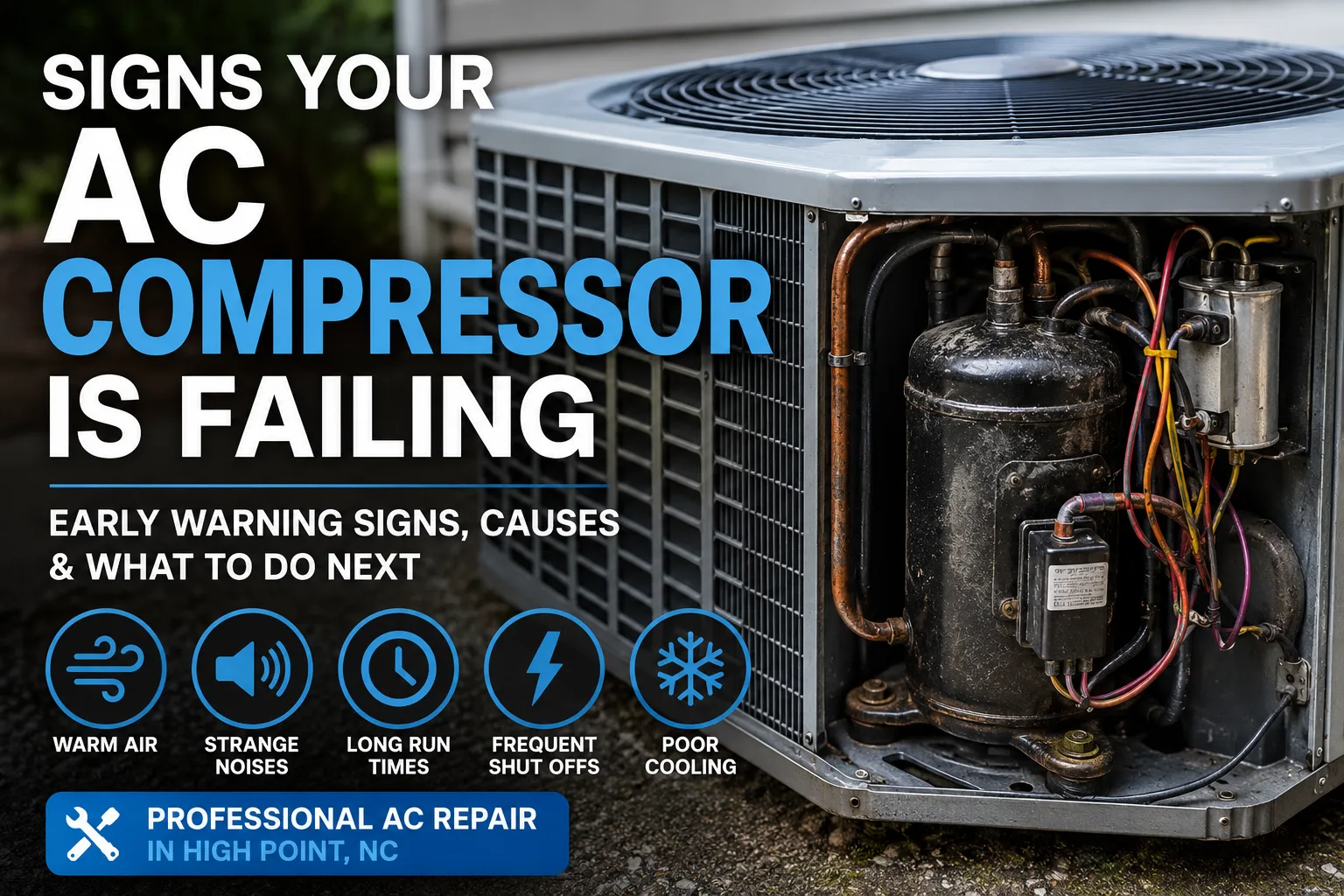

Your AC compressor is one of the most important components of your entire cooling system. Often referred to as the “heart” of the air conditioner, the compressor is responsible for circulating refrigerant through the HVAC system and helping remove heat from inside your home.
When the compressor begins failing, your air conditioner may struggle to cool properly, run inefficiently, or stop working altogether. Compressor problems are among the more serious HVAC issues homeowners can face, especially during the peak of a hot North Carolina summer.
Recognizing the warning signs of compressor failure early can help prevent complete system breakdowns and reduce the risk of expensive repairs.
What Does an AC Compressor Do?
The compressor is located inside the outdoor condenser unit of your air conditioning system. Its main job is to compress refrigerant and move it through the cooling cycle.
Without the compressor, your HVAC system cannot properly remove heat from your home.
Because the compressor works under heavy pressure during summer months, it experiences significant wear over time, especially in areas like High Point where HVAC systems often run continuously during hot and humid weather.
Warm Air Coming From Vents
One of the earliest signs of compressor trouble is warm air blowing from your vents.
If the compressor cannot circulate refrigerant properly, the system loses its ability to remove heat from indoor air effectively.
Homeowners may notice:
- Warm air instead of cool air
- Long cooling cycles
- Weak cooling performance
- Indoor temperatures rising throughout the day
Many homeowners first notice compressor problems after experiencing issues similar to an AC running but not cooling properly or warm air coming from vents.
Strange Noises From the Outdoor Unit
Unusual noises coming from the outdoor condenser unit can also indicate compressor problems.
Warning sounds often include:
- Buzzing noises
- Rattling sounds
- Clicking noises
- Hard starting sounds
- Loud humming
Electrical issues, loose components, failing motors, or internal compressor damage can all create abnormal noises during operation.
If your outdoor unit suddenly becomes much louder than normal, professional HVAC inspection is recommended.
AC System Constantly Running
A struggling compressor may cause your air conditioner to run continuously without reaching the desired indoor temperature.
As compressor efficiency decreases, the HVAC system must work harder and longer to cool the home.
This often leads to:
- Long cooling cycles
- Higher energy bills
- Reduced indoor comfort
- Additional strain on HVAC components
High Point homeowners often notice this problem during periods of extreme summer heat when older systems struggle to keep up with cooling demands.
Hard Starting Problems
Hard starting occurs when the compressor struggles to turn on at the beginning of a cooling cycle.
You may notice:
- Shaking during startup
- Loud clicking noises
- Lights dimming briefly
- Delayed cooling startup
Hard starting places additional stress on both the compressor and electrical system. Over time, this can lead to complete compressor failure if not addressed.
Circuit Breaker Frequently Tripping
If your air conditioner repeatedly trips the circuit breaker, compressor problems may be the cause.
Failing compressors often overheat or draw excessive electrical current, causing the breaker to shut the system down for safety.
Frequent breaker trips should never be ignored because they can indicate serious electrical or mechanical HVAC issues.
Professional emergency HVAC services in High Point NC may be necessary if the system repeatedly shuts down during hot weather.
Reduced Airflow and Weak Cooling
As compressor performance declines, overall cooling efficiency often decreases as well.
Homeowners may notice:
- Weak airflow
- Uneven temperatures
- Rooms staying warm
- Reduced cooling performance
- Humidity problems indoors
Compressor issues can also contribute to frozen evaporator coils and airflow restrictions.
You can learn more in our guide on frozen AC coil causes and solutions.
Refrigerant Problems Can Damage Compressors
Low refrigerant levels are one of the leading causes of compressor failure.
When refrigerant becomes too low due to leaks, the compressor is forced to work harder under increased strain.
Over time, this additional stress can overheat the compressor and lead to permanent damage.
Signs of refrigerant problems often include:
- Warm air from vents
- Frozen refrigerant lines
- Hissing sounds
- Long cooling cycles
Professional AC repair services in High Point NC can inspect refrigerant levels and identify leaks before compressor damage worsens.
Older HVAC Systems Are More Vulnerable
Like any mechanical component, compressors wear out over time.
Most residential air conditioning systems last between 10 to 15 years depending on maintenance, usage, and climate conditions.
Older systems operating during long North Carolina summers often experience more stress due to constant cooling demand.
If your AC system is aging and frequently experiencing cooling problems, replacement may become more cost-effective than repeated repairs.
Professional AC installation services in High Point NC can help homeowners upgrade to more efficient cooling systems with improved reliability.
Why Compressor Problems Should Be Addressed Quickly
Ignoring compressor warning signs can eventually lead to complete system failure.
Once the compressor fails completely, your air conditioner may stop cooling entirely.
Delaying repairs can also create additional problems throughout the HVAC system, including:
- Electrical damage
- Overheating components
- Reduced energy efficiency
- Higher repair costs
- Complete cooling loss
Early diagnosis can sometimes prevent more expensive repairs later.
How Regular Maintenance Helps Prevent Compressor Failure
Routine HVAC maintenance plays a major role in protecting compressor health.
Professional maintenance helps:
- Improve airflow
- Maintain refrigerant levels
- Reduce system strain
- Clean condenser coils
- Identify small issues early
Seasonal AC tune-up services can help extend the lifespan of your cooling system and reduce the risk of compressor breakdowns during summer.
Professional Compressor Repair in High Point NC
If your air conditioner is showing signs of compressor trouble, professional HVAC inspection is the safest way to identify the issue before it worsens.
Experienced technicians can inspect electrical components, refrigerant levels, airflow, condenser performance, and overall system condition to determine whether repair or replacement is the best solution.
Homeowners throughout High Point NC rely on professional HVAC services to keep their cooling systems operating efficiently during the hottest months of the year.
Frequently Asked Questions
What are the signs of a bad AC compressor?
Common signs include warm air from vents, loud noises, hard starting, long cooling cycles, weak airflow, and repeated circuit breaker trips.
Can a bad compressor still run?
Yes. In many cases, a failing compressor may still run temporarily while producing weak cooling performance.
What causes AC compressors to fail?
Common causes include low refrigerant, dirty coils, overheating, electrical problems, poor maintenance, and normal wear over time.
Can low refrigerant damage the compressor?
Yes. Low refrigerant forces the compressor to work harder, which can eventually lead to overheating and failure.
Should I repair or replace a failing compressor?
This depends on the age of the system, repair costs, and overall condition of the HVAC equipment. Professional inspection can help determine the best option.