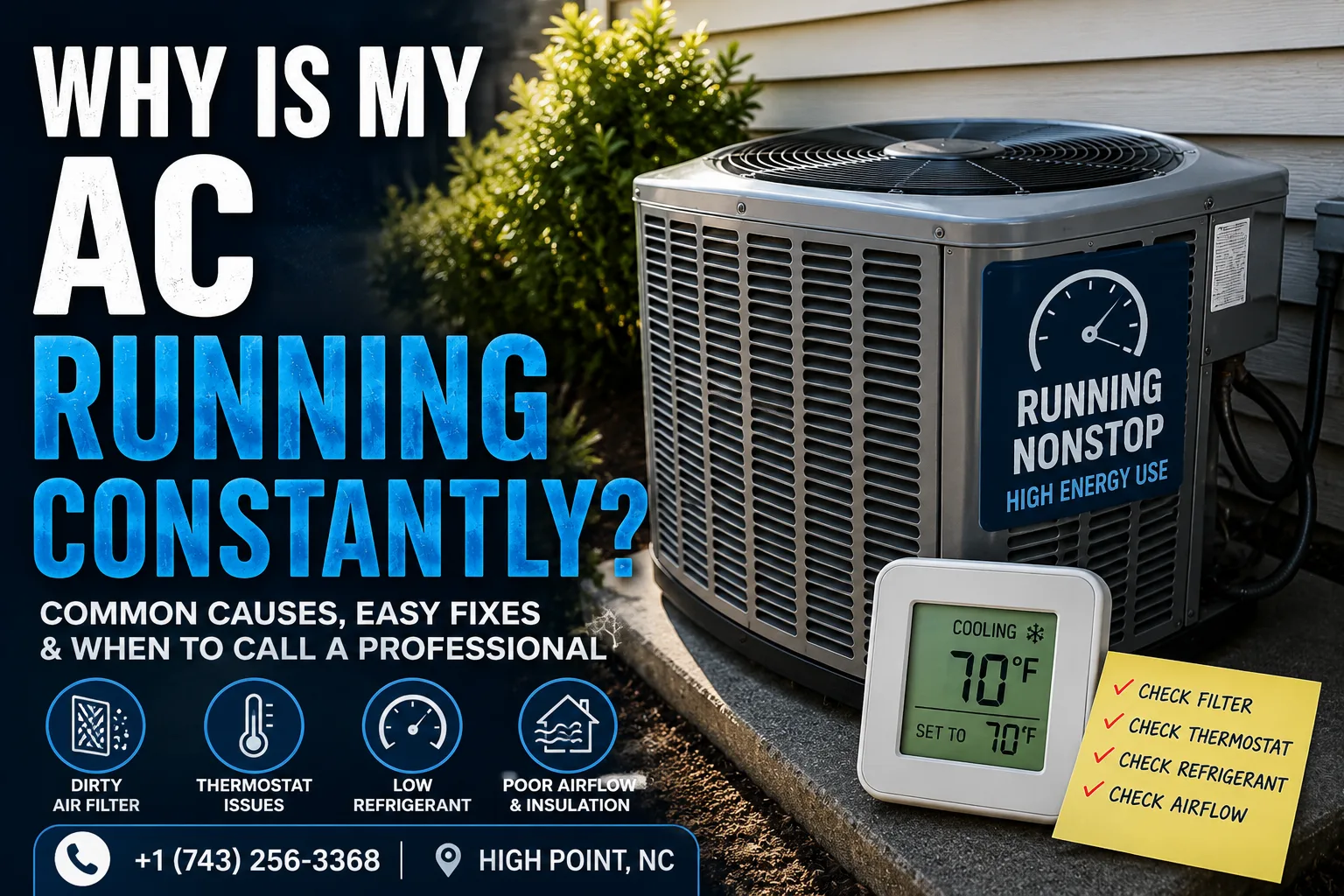

It is normal for an air conditioner to run more frequently during extremely hot weather, especially during peak summer temperatures in North Carolina. However, if your AC seems to run nonstop for hours without shutting off, there may be an underlying issue affecting your HVAC system’s efficiency.
An air conditioner that runs constantly can increase energy bills, reduce indoor comfort, place excessive strain on HVAC components, and shorten the lifespan of the system. In many cases, homeowners first notice the issue when certain rooms still feel warm even though the AC never stops running.
Understanding what causes an AC to run continuously can help you identify problems early before they lead to expensive repairs or complete system failure.
If your cooling system is struggling to maintain comfortable temperatures, scheduling professional AC repair in High Point NC can help identify the cause and restore proper cooling performance.
Dirty Air Filters Restricting Airflow
A clogged air filter is one of the most common reasons an AC runs constantly. Your HVAC system depends on proper airflow to distribute cool air throughout the home. When the filter becomes dirty, airflow becomes restricted and the system has to work harder to maintain the thermostat setting.
As airflow decreases, cooling efficiency drops and the AC may continue running for much longer cycles than normal.
Common Signs of a Dirty Air Filter
- Weak airflow from vents
- Dust buildup around registers
- Uneven room temperatures
- Higher monthly energy bills
- Long cooling cycles
- Indoor humidity problems
In many homes, neglected air filters can also contribute to frozen evaporator coils and reduced cooling performance. Restricted airflow is one of the leading reasons an AC freezes up during summer.
Replacing filters regularly is one of the easiest ways to improve HVAC performance and reduce unnecessary strain on the system. Most homeowners should replace filters every 1 to 3 months depending on pets, allergies, and indoor air quality conditions.
The U.S. Department of Energy also recommends changing air filters regularly to improve airflow and cooling efficiency.
Low Refrigerant Levels
Your air conditioner relies on refrigerant to remove heat from indoor air. If refrigerant levels become low because of a leak, the system loses cooling capacity and may continue running without reaching the desired temperature.
Low refrigerant levels force the AC to work much harder while providing less cooling output.
Signs of Low Refrigerant
- Warm air coming from vents
- Ice buildup on refrigerant lines
- Hissing or bubbling sounds
- Long cooling cycles
- High indoor humidity
- Reduced cooling performance
Many homeowners notice that the AC keeps running while the home never actually feels cool. In some cases, refrigerant problems are also responsible when an AC runs but does not cool properly.
Because refrigerant systems operate under pressure, leaks should always be repaired by a licensed HVAC technician.
Thermostat Problems
Sometimes the issue is not the AC itself but the thermostat controlling the system.
If the thermostat is malfunctioning, incorrectly calibrated, or poorly positioned, it may continue signaling the system to cool even after indoor temperatures are comfortable.
Common Thermostat Issues
- Incorrect temperature readings
- Dead batteries
- Loose wiring connections
- Old manual thermostats
- Improper thermostat placement
For example, thermostats exposed to direct sunlight or placed near heat-producing appliances may falsely detect higher temperatures, causing the AC to run longer than necessary.
Upgrading to a programmable or smart thermostat can help improve cooling efficiency and system control.
Dirty Condenser Coils
The outdoor condenser unit is responsible for releasing heat removed from your home. When condenser coils become covered with dirt, leaves, grass, or debris, the system struggles to release heat efficiently.
As heat transfer becomes less effective, the AC must run longer to cool the home.
Dirty condenser coils can also increase operating temperatures inside the system and place additional stress on the compressor.
Routine HVAC maintenance and seasonal cleaning can help improve system efficiency while preventing excessive runtime.
Extremely Hot Outdoor Temperatures
During severe summer heat waves, it is common for air conditioners to run longer than usual. High outdoor temperatures increase the cooling demand placed on the HVAC system.
However, even during extremely hot weather, the AC should still cycle off occasionally once indoor temperatures stabilize.
If your system runs continuously all day without reaching the thermostat setting, there may be another issue reducing performance.
High summer temperatures across North Carolina can place additional strain on HVAC systems, especially older units or systems that have not been properly maintained.
Poor Insulation and Air Leaks
Sometimes the air conditioner itself is functioning correctly, but cooled air escapes through poorly insulated areas of the home.
When cool air leaks outside, the AC has to continue running to maintain indoor comfort.
Common Areas for Air Leaks
- Old windows and doors
- Attic insulation gaps
- Damaged weather stripping
- Poorly sealed ductwork
- Cracks around vents and piping
Improving insulation and sealing leaks can significantly reduce HVAC runtime and improve energy efficiency.
Frozen Evaporator Coils
Frozen evaporator coils can also cause an AC to run continuously. When ice forms on the indoor coil, airflow becomes restricted and cooling efficiency drops dramatically.
The system may continue operating while struggling to cool the home properly.
Frozen coils are often caused by:
- Dirty air filters
- Low refrigerant levels
- Blower motor problems
- Blocked airflow
- Dirty evaporator coils
In many cases, homeowners first notice ice buildup before realizing the system has been running nonstop for extended periods.
Undersized Air Conditioning System
If the air conditioner is too small for the home, it may constantly struggle to keep up with cooling demand.
An undersized HVAC system often runs continuously because it lacks enough cooling capacity for the square footage of the property.
This issue is more common in:
- Older homes
- Home additions
- Poorly sized replacement systems
- Properties with inadequate insulation
A professional HVAC load calculation can determine whether the system size matches the home’s cooling needs.
Leaky or Damaged Ductwork
Air ducts distribute cooled air throughout the home. If ductwork becomes damaged or develops leaks, conditioned air may escape before reaching living areas.
As airflow decreases, the AC has to continue running longer to maintain indoor temperatures.
Leaky ducts can also contribute to:
- Uneven room temperatures
- Weak airflow
- Dust buildup
- Reduced indoor comfort
- Higher utility bills
Professional duct inspection can help identify hidden airflow problems affecting HVAC efficiency.
How To Prevent Your AC From Running Constantly
Preventive maintenance plays a major role in reducing excessive AC runtime and improving overall cooling performance.
Helpful HVAC Maintenance Tips
- Replace air filters regularly
- Schedule seasonal HVAC maintenance
- Keep vents open and unobstructed
- Clean around outdoor condenser units
- Seal windows and doors properly
- Upgrade outdated thermostats
- Inspect ductwork for leaks
Routine maintenance can help improve efficiency, reduce energy costs, and extend HVAC system lifespan.
Professional HVAC maintenance services in High Point NC can also help identify small issues before they become larger repairs.
When To Call an HVAC Professional
Some minor issues can be resolved with basic maintenance, but constant AC runtime often indicates a deeper HVAC problem that requires professional inspection.
You should contact an HVAC technician if:
- The AC never shuts off
- Your home still feels warm
- Ice forms on the system
- Energy bills suddenly increase
- Airflow becomes weak
- You hear unusual noises
- The system struggles during moderate temperatures
Ignoring the issue may eventually lead to compressor damage or complete system failure.
Final Thoughts
If your AC is running constantly, the issue may involve airflow restrictions, refrigerant problems, thermostat malfunctions, poor insulation, or system inefficiency.
While some causes are simple maintenance issues, others require professional HVAC diagnosis and repair.
Addressing the problem early can help improve indoor comfort, lower cooling costs, and protect your air conditioning system from long-term damage.
If your cooling system keeps running nonstop or struggles to maintain comfortable temperatures, scheduling professional air conditioning repair in High Point NC is the best way to identify the problem and restore system performance.